Let’s start by making one point clear: this is exclusively my own opinion and does not reflect the views of any organisation I might represent either directly or indirectly.
My view is not based on personal likes or dislikes, nor on taking sides, political positioning or chasing headlines. It is based on what I have learned through talking, listening, understanding and trying to establish the facts rather than making assumptions.
There has been criticism because I have not focused my attention on the national stadium debate, particularly because I have not taken the position of those who oppose the planned development.
But whether a development is right or wrong is not for any individual journalist to determine. The approval of development projects and the economic direction of a nation are matters for those who govern us and, ultimately, the public. They are not the responsibility of a sports reporter.
I should also make clear that my personal political and economic beliefs are not necessarily reflected in the way I approach my work. I am anti-capitalist, socialist by nature, liberal in my views, an independentist and, in the eyes of some, an anarchist in ideology. But I remain neutral in my journalism.
So, how do I assess the proposal to build a national stadium as part of the wider development?
As someone who would rather see the eradication of money- and profit-driven economies, of course I would prefer to explore other ideas. But that is certainly not the path Gibraltar is taking into the future, nor the way it has chosen to develop.
The meaningful way to assess such a project, therefore, is to consider how it fits into Gibraltar’s development. Looking towards the future, rather than simply at the present, and considering the direction in which the area is developing, the progress of the economy and the ambition to grow sectors such as event-led tourism, the national stadium makes sense.
This is not a quick-gain industry like the cryptocurrency market, which, like the dotcom boom, can rise and fall before settling into a more stable position following a bubble. Nor is it the betting industry, which has provided significant economic benefits but has also followed a rollercoaster path.
It is not the traditional British heritage-led tourist market, either, nor simply the British cultural attraction Gibraltar has exploited for decades.
What this really represents is a challenge for Gibraltar to prove that it can host events successfully, attract new audiences, organise events professionally and deliver the standards of excellence the market demands. This is not about a few years, but about establishing something that could serve Gibraltar for generations to come. Just remember how long the Victoria Stadium stood.
The national stadium could become our little Wembley. We will not be hosting England against Germany or the likes of Oasis, but we could have the capacity to host the types of events that Gibraltar is already attracting through the efforts of so many people.
The cost to the taxpayer
And what will the cost be to the taxpayer?
If the project proceeds as envisaged, without a direct public contribution to the stadium, there would be no direct construction cost to the taxpayer. But the final financing arrangements have yet to be established, so it is important not to present that as a settled position.
Anyone who believes the cost to the taxpayer will be enormous simply because Gibraltar Savings Bank money was initially discussed as a possible source of funding needs to consider what that arrangement would actually involve.
Even if Gibraltar Savings Bank money were used, it would be more in the nature of a loan, repayable with interest. Nobody should believe that an institution such as the Gibraltar Savings Bank would enter into an agreement without assessing the risks involved in the amounts being discussed.
Furthermore, the proposed financing arrangements have already changed since the initial announcements and could change again. The project remains at an early stage, and the final details still need to be established.
What is important is to distinguish between two elements that have become intertwined, creating a picture that does not necessarily reflect the reality of the proposal.
On the one hand, there is a football stadium. On the other, there is a commercial and residential development. The two have become connected because a practical approach has been taken to the land and the development boundaries.
Football will be using its own money, but not to the extent it would otherwise need to in order to obtain the stadium it requires, not just for today but for the future.
If the stadium does not have to be financed entirely from football’s own funds, and the wider development is financed by a consortium of developers, the benefits could extend beyond the stadium itself. Money that football would otherwise have to commit to construction could instead be directed towards other infrastructure intended to improve the facilities available to Gibraltar sport.
This principle of investing in infrastructure has already been demonstrated at Europa Sports Stadium.
Once upon a time, a stadium at Europa Point was described as a white elephant. Many believed nothing viable could come of it. That changed.
A stadium was built, alongside a sports hall, overlooking the same cliff face that some did not want altered. What changed was the layout and design, not the proposed use of the area.
Slowly, the facility has grown, with new stands, increased use of the site and improved facilities. The stands have been welcomed, and the stadium’s use has expanded. Even some of those who opposed the original proposal now consider it a good idea and have defended its role as the home of rugby.
The same principle of investing in infrastructure was applied at Europa Sports Stadium. A site that essentially belongs to the Gibraltar Government, but is temporarily managed by the Gibraltar FA for its use, was upgraded at a cost of £3.5 million.
What did it cost Gibraltar?
Nothing in direct expenditure on that upgrade.
It opened the door to facilities that allow the segregation of supporters where sporting regulations require it. It increased the stadium’s capacity and improved its function, not just for football but for the other sports that will use it, as well as events that can be hosted there.
These are facilities intended to serve Gibraltar not just today, but 20 or 30 years from now.
When teams visit, the southern end of Europa Point can now fill with supporters. The fans come, and they want to come. The more often Gibraltar’s teams qualify for competitions, the greater the opportunities to fill those stands.
When the national stadium is completed, it will be up to other sports to help fill its stands.
Sports such as rugby have previously stated that their aim is to bring in the fans. It will be up to them to prove they can do so. The cost of providing the improved facilities at Europa Point has not fallen directly on them.
One thing that is certain is that there has been little complaint about the enhancement of Europa Sports Stadium. Yet this was an investment made with football money, and the eventual beneficiaries will include other sports that use the facilities.
The Gibraltar 7s will benefit. So will European rugby, Gaelic rugby, youth sports and cricket. And, of course, any concerts held there.
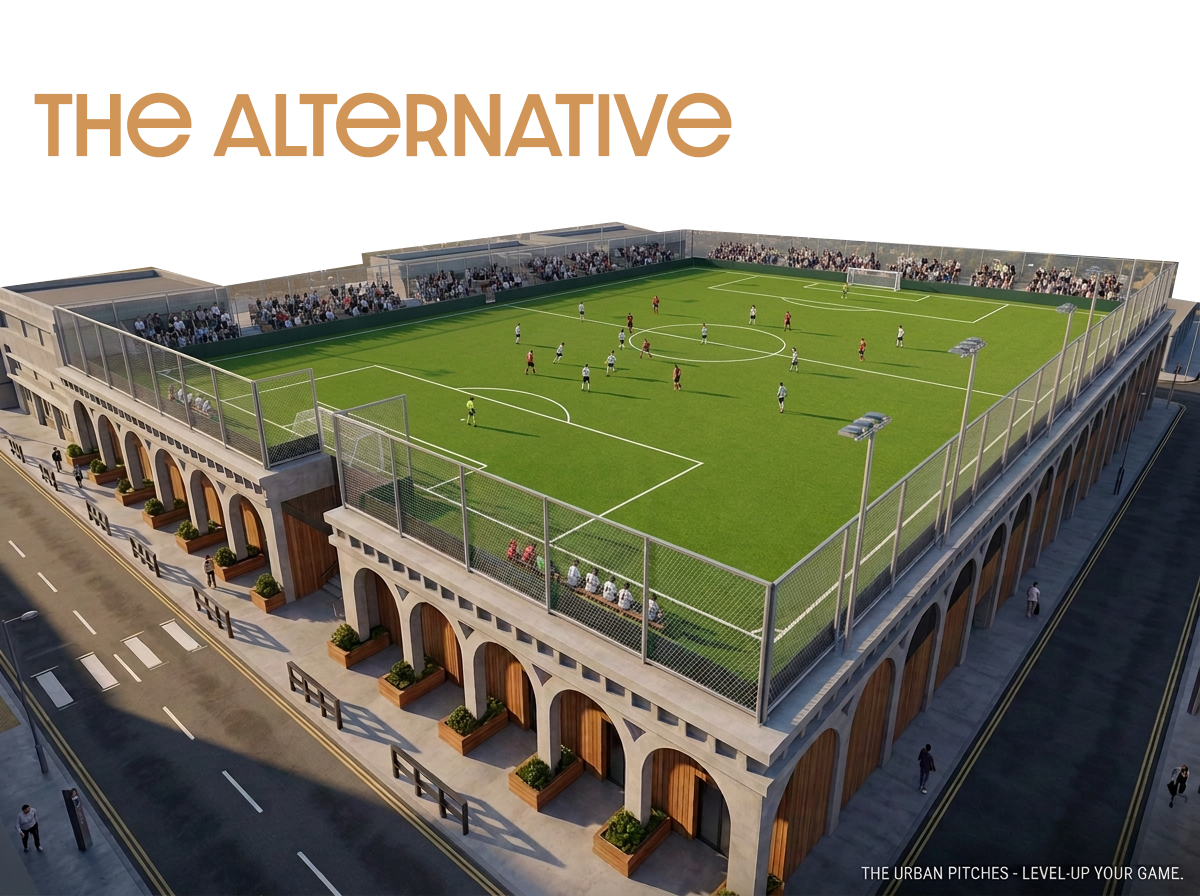
What are the alternatives?
Now let’s look at the alternatives to the current proposal.
With Victoria Stadium now gone, people can argue all they wish about whether it should have been demolished. The fact remains that it was. The wastewater pumps were moved, Cepsa moved, and the skate park was removed.
We need to start with the basics to understand what an alternative would look like.
The only area where a stadium could be constructed without extending beyond the former Victoria Stadium footprint would be the area occupied by the east stands, the main stands, pitch two and the athletics track. Everything outside those areas was never part of Victoria Stadium itself.
Therefore, any standalone stadium development seeking to use additional land, whether for car parking or even a small training pitch, would have to account for the premium required to use that land.
Proposals that include training pitches around Winston Churchill Avenue, the former Cepsa site and the old Victoria Stadium east-side car park would require the land to be acquired for that purpose.
This alone would, it is understood, require an outlay of around £10 million.
Add the construction of stands for a main stadium with a capacity of 4,000 to 5,000, and estimates for construction in Gibraltar suggest a further £35 million to £40 million would be required. This would be before additional expenditure on fittings and refurbishment.
The facilities would still require a substantial structure, with a roof similar to that already proposed, because of the need to ensure floodlights do not interfere with air traffic.
The proximity of the stadium to the runway would also mean that the same procedures required for the proposed national stadium would need to be followed.
Any suggestion that four floodlight towers, like those previously located at the site, could simply be reinstated is now out of the question. Their continued existence in the past was a legacy of the fact that they predated the relevant regulations. They could not simply be removed and replaced without modern requirements coming into play.
In other words, the structure required for the stadium would be broadly similar to the proposed oval-roofed design, albeit without the surrounding residential blocks and commercial centre.
Alternative proposals involving at least two additional pitches around Winston Churchill Avenue, near the former Cepsa site, would provide extra facilities to kick-start recreational football. But those facilities would have to be paid for by football itself, with the money coming directly from football funds.
Without outside investors, a commercial centre or a residential development, the full cost of a standalone stadium would have to be borne by the association itself. Ultimately, the financial burden would fall exclusively on football.
Gibraltar would have a stadium with a capacity of around 4,000, three additional pitches compared with what it has today, and no new commercial centre or residential blocks beyond those already in existence.
That is the alternative that needs to be considered alongside the current proposal.
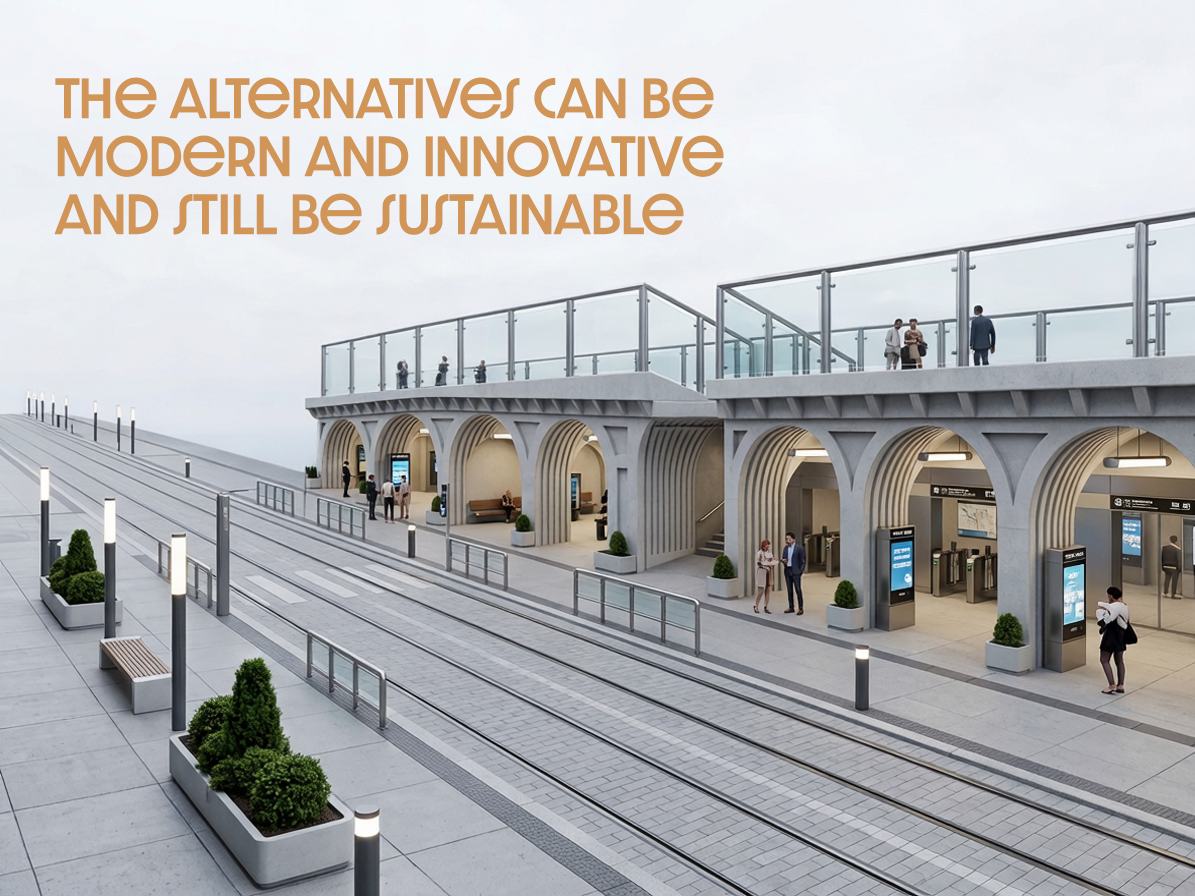
Why 8,000 seats?
Now let’s turn to the national stadium, the one that, according to some, will never be filled.
First of all, why 8,000 seats?
If you build a stadium with a fixed perimeter of masonry, you are unlikely to be able to extend it easily in the future. Build a 4,000-seat stadium and that may be all you ever have.
Remember, that would mean being able to accommodate only around 2,000 visiting supporters if the allocation were split equally. That is effectively the situation we have faced for some time.
When clubs such as Rangers ask for 6,000 tickets, or even 3,000, you would have to say no.
Clubs such as Twente, Celtic and Copenhagen are among those that have asked for more than 2,000 tickets. The list could go on.
All would face restrictions. We would be limiting our ability to make greater use of the facilities and generate additional revenue through attendances.
With an 8,000-seat stadium, half the capacity would be 4,000. That would allow visiting teams to receive the 4,000 tickets they might request. Not 6,000, perhaps, but certainly more than 2,000.
But you might ask why we should build a stadium of that size for what could amount to just three or four matches a year at most.
Granted, that does not initially sound like much justification for such an investment. But the reality is that we would at least have the capacity to accommodate those three or four occasions, or more.
Of course, nothing is guaranteed. It will require effort and work, and much will depend on the clubs themselves.
Now imagine that, instead of relying solely on clubs qualifying for competitions, we begin inviting teams to play international friendlies, organise tournaments and host youth competitions.
Suddenly, the opportunities increase. It is no longer just about local supporters filling the stands. Visiting teams and their supporters bring people to Gibraltar, potentially paying for the privilege of attending and contributing to the local economy.
Now diversify further. Conferences, shows, concerts and other events could make 8,000 seats seem insufficient rather than excessive.
The Gibraltar Music Festival attracted crowds in the region of 11,000 to 15,000. That alone illustrates why a larger venue could be beneficial.
Invite established musical acts, even those in the middle reaches of the billboards, and 8,000 seats can quickly become a limiting factor. Consider groups such as our very own Melon Diesel, and suddenly the capacity starts to make sense.
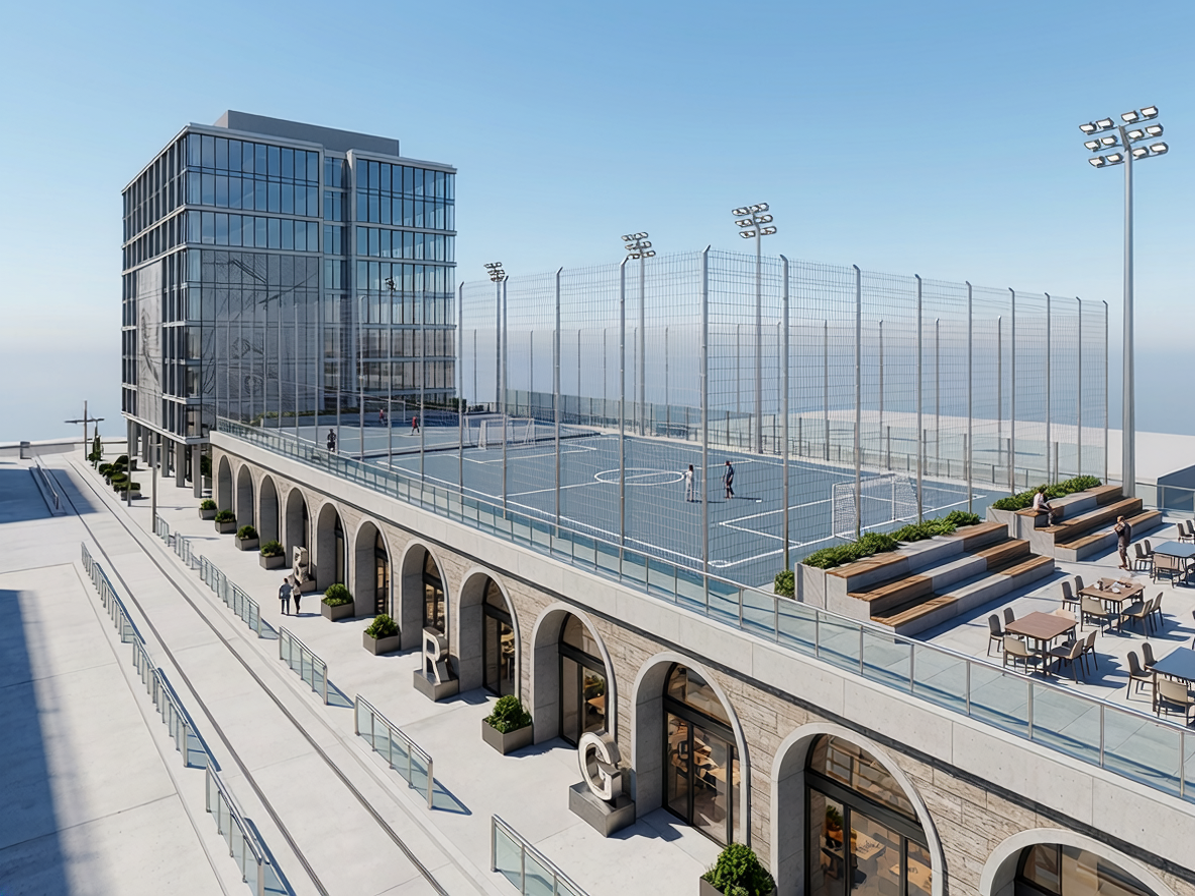
Security and safety
Then we come to the big question of security and safety.
Granted, an 8,000-seat stadium means that, in the event of crowd trouble, Gibraltar must be prepared to deal with it. Many would argue that it is not. Its police force is relatively small, without the same ability as larger nations to call in reinforcements from elsewhere to assist. All of this is true when considering the possibility of having to deal with several hundred rioting supporters.
Yet these concerns have not prevented the authorities from authorising concerts, events and even protest marches involving significant crowds in the past.
The process of assessing risk allows the relevant authorities to evaluate the circumstances of each event. As we have seen on numerous occasions, the authorities can restrict attendance numbers where necessary. As with other major events, including football matches, licences and permissions must be obtained before an event can proceed.
The decision on whether an event can safely take place will not be football’s to make, even if football itself wishes to host it or believes it can do so. That responsibility rests with the relevant authorities.
So, if anyone wants to determine whether an 8,000-seat stadium is appropriate for Gibraltar from a security and safety perspective, perhaps we should first ask the authorities responsible for making that assessment rather than assume their answer will be no.
I have yet to see any public comments from the relevant authorities suggesting that the proposal is unacceptable on security grounds. If concerns need to be raised, they should be raised through the appropriate channels and assessed at the appropriate time.
What would my alternative be?
There is, of course, another question worth considering: what would I choose if the decision were mine?
My answer would be very different from the proposal currently on the table.
I would not have a national stadium, nor a commercial centre as proposed, nor the luxury residential blocks. But then again, I would not have many of the other luxury developments scattered across Gibraltar either, because I do not believe they are necessary.
I do not believe society should be driven by the pursuit of profits and wealth. My belief is that we should be aiming for sustainability and a society that takes care of everyone equally, without profit margins being the driving force behind everything we do.
Instead of a massive stadium, I would look at providing football pitches and recreational areas. But I would also look at making use of the land to develop new and sustainable sectors that our community needs.

A simple example would be an aquaponics farming centre.
We need to reduce the cost of transporting essential products that we could potentially produce ourselves. We should also be looking, particularly considering what we experienced during the pandemic, at how we can become more self-sufficient in food production. A land area such as that occupied by the proposed national stadium provides an opportunity to explore precisely that, without removing the sporting element from the equation.
There is also the question of how we use space and build upwards. Does our society really need to attract mass audiences who must travel to Gibraltar for a 90-minute sporting event, or even a four-to-six-hour festival? On a global scale, this adds to the environmental cost of providing entertainment, while ultimately generating profits for a few.
If the objective were simply to provide entertainment for the local market, that market is small enough to be catered for without the need for major, costly events.
I would therefore explore an aquaponics centre, using the height of the structures to incorporate facilities above or alongside sporting areas. The structural requirements for accommodating 1,000 to 2,000 people would not necessarily be vastly different from those involved in constructing the building structures required for an aquaponics centre.
Not only would you be providing sporting facilities, but you would also be creating an entirely new sector for our society. One that produces an essential resource in the form of food, including vegetables and fruit, while creating employment and still providing the sporting facilities required.
You might argue that this would mean not building a national stadium for the national team to play in. And you would be correct. I would not.
There is already a stadium at Europa Point, and that could be developed further if the need arose. My focus would instead be on creating more pitches and sporting areas that could be shared across all sports, while developing an entirely new industry.
But let’s be realistic. These are not projects that are likely to happen.
Nobody will invest in aquaponics. Nobody is prepared to take the plunge and explore a sector that, under our own national contingency planning requirements, we should arguably be seeking to develop. And nobody seems particularly interested in investing money unless there is a clearly defined profit to be made.
The reality is that Gibraltar is a capitalist, wealth-oriented society, with profit at its core. It is looking to develop new sectors, such as sports and event-led tourism, to add to an already growing portfolio of industries and attractions.
Considering that reality, the national stadium as proposed makes sense.
Even if it is not what will save our children from the environmental circumstances we have created for them.
So, where do I stand?
Having considered the alternatives, the costs, the proposed capacity and the potential uses, my conclusion remains that the national stadium makes sense within the direction Gibraltar has chosen for its development.
That does not mean I would have chosen this model. Nor does it mean that every aspect of the proposal should escape scrutiny. The financing arrangements, the final design, the commercial development and the practicalities of operating the stadium all deserve proper examination.
But opposing the project simply because Gibraltar is small, or because some events may not fill the stands, does not in itself answer the wider question of what the facility could offer.
A smaller standalone stadium would have its own considerable costs and limitations. The proposed development offers a different route, one that links sporting infrastructure with wider investment and the possibility of attracting events and audiences to Gibraltar.
Whether it ultimately delivers on that potential is another matter. That will depend on the people, organisations and businesses involved, and on the decisions made as the project progresses.
My personal preference would be for a very different approach to development. But recognising that does not prevent me from acknowledging that, within the economic model Gibraltar has chosen, this proposal has a logic.
My role as a journalist
There is one final point I want to address: my role as a journalist.
Why don’t I write about the stadium on a regular basis?
The question is whether I should focus my attention on one subject purely to generate headlines and readership. That is not a decision I make alone, nor is it how I believe journalism should operate.
I work under a strict principle: I represent an organisation with a long history and reputation, and I will never put that reputation at risk for a headline or what we now call ‘clickbait’. I also work within an editorial structure, with editors and sub-editors overseeing my work.
Forty-two sports are active on the Rock, and well over 4,000 people use our sporting facilities. My role is not to impose an opinion, but to observe and report. My priority is to assess public interest, and by that I do not simply mean whether something is interesting to readers or whether it sells newspapers. I mean its importance and value to the community and its wider impact.
The stadium debate has received its column inches, with both sides of the argument documented. That does not mean there is nothing more to report, or that further scrutiny is unnecessary. But neither does it mean that every development must become a running commentary simply because some people expect it to.
If others have opinions they wish to make public, they should put their own names to them and step forward. They are entitled to have their views heard, just as those they criticise are entitled to respond. When we question someone or something, we have a duty to ask whether they wish to respond. They have the same right to have their views published.
And, as I said at the beginning, I will repeat once again: this is purely my own opinion and position, and does not represent the views of any organisation I work for.
Truthfully and realistically, my opinion does not determine whether this project goes ahead. Nor should it.
I will not be attending Development and Planning Commission meetings to put forward my personal views on any project, let alone the national stadium. There is, however, an opportunity for those who have views to express them directly to the people who make the decisions on whether a project should go ahead. They can step forward and make their positions known.
Now that would be real political activism.
Note: – All images are my own. The Vertical Farming concept is a design sketch idea produced several years ago and posted on my social media pages at the time. The idea was for a a concept proposal for a vertical farm within reclaimed land. The alternative stadium ideas are based on draft sketch ideas produced in recent weeks and which have since been edited using AI for quicker production. This do not represent any ideas produced by any other entity or form any official proposal, all images are entirely conceptual designs illustrating what is possible for ease of visualisation.


Leave a Reply