It’s been a hot summer, hasn’t it? It certainly has for those of us living in southern Europe. Of course, there are always people who will say, “It’s summer—it’s supposed to be hot.” I tend to ignore those comments. Not because they’re entirely wrong, but because they often become an excuse to dismiss the bigger picture. It’s easier to shrug our shoulders than to think about climate change or ask ourselves what small changes we can make to reduce our impact on the environment.
Most people won’t openly say, “What difference can little old me make?” But I suspect many of us think it from time to time. It’s easier to buy something new than repair something old. It’s easier to jump into the car than walk a kilometre or two. Yet that short walk probably takes no more than fifteen or twenty minutes, and the health benefits alone far outweigh spending another journey sitting behind the wheel, only to spend the evening sitting in front of another screen.
So what has any of this got to do with art and creativity?
For me, everything.
(check out the images from the work done from day one)
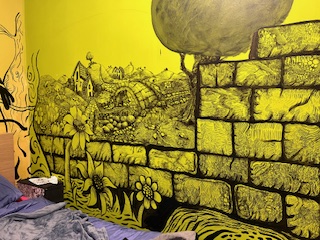
Creativity isn’t just about painting a picture or sculpting a piece of clay. It’s about seeing possibilities where others see problems. It’s about looking at something destined for the rubbish bin and imagining what it could become instead.
We live in a consumer-led society where everything has to be cheaper, better and, above all, quicker. We want it now. That little word—now—may well be one of our greatest problems.
What if it could wait until tomorrow? Does twenty-four hours really make that much difference? Does everything have to be brand new? Is paying the lowest price always the best choice, or would it be better to spend a little more on something that lasts, benefits the environment, and ultimately improves our quality of life?
For many years I have collected what most people simply call rubbish.
I’ve lost count of the number of times I’ve been criticised, laughed at or questioned for picking up odd pieces of wood, plastic bottles, shopping bags or almost anything else that I believed could have another purpose. To me they were never rubbish. They were materials waiting for another life.
At first, I collected things because I enjoyed the challenge of making something from nothing.
Later, life took an unexpected turn, and that way of thinking became a necessity.
Just over two years ago, I found myself trying to avoid homelessness. The opportunity came through Gibraltar’s Rent and Repair Scheme, where I was offered a flat that had stood abandoned for more than a decade.
For someone in my position, it was a lifeline.
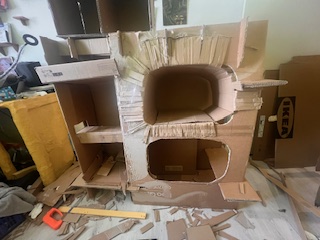
It gave me a roof over my head, but it also handed me a challenge. Making it into a home was entirely my responsibility. I could either make it work or fail trying.
I chose to make it work.
I had a full-time job, but my salary was only just above minimum wage. Like so many people, I wasn’t struggling because I lacked determination—I was struggling because the rising cost of living left very little room to move.
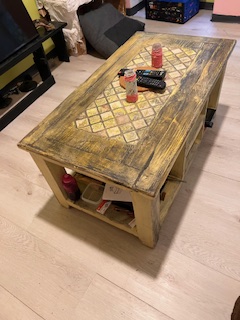
When I first stepped inside the flat, it was difficult to imagine anyone living there.
(check out the images from the work done from day one)
Black mould covered sections of the walls. Years of dust and debris coated the floors. Paint peeled from cracked walls. Doors wouldn’t close properly. The electrics needed attention. There was no furniture, no wardrobe, no cutlery and not even a bed.
Still, I had a sink, a bath and a roof over my head.
That was enough to begin.
I didn’t dream about luxury or designer interiors. I simply wanted somewhere safe, somewhere that felt like home.
The first challenge was convincing the bank that, with my salary and the money I would save by no longer paying an exorbitant private rent, I could afford a modest loan. I wasn’t asking for tens of thousands of pounds. I only needed enough to buy the essential building materials.
Everything else, I kept telling myself, would come later.
Planning became as important as the work itself.
I divided the project into four stages.
The first was making the flat safe and fit to live in.
The second was creating temporary furnishings that would allow us to live comfortably while I slowly saved for permanent furniture.
The third would be replacing those temporary creations with long-term solutions.
The fourth—and perhaps the most important—would simply be living.
You may still be wondering what any of this has to do with sustainability or creativity.
Everything.
Every decision I made was guided by one simple question:
Can this be reused?
(check out the images from the work done from day one)
While buying the materials needed for the essential repairs, I deliberately kept almost everything that other people would have thrown away. Timber, broken doors, old frames, leftover tiles, offcuts of flooring—if I could imagine another purpose for it, I kept it.
The pile grew quickly.
Then, just as quickly, it began to disappear as each piece found a new purpose.
By the time the first phase was complete, I had sent less than a van load of waste to the refuse depot. Almost everything else had been reused or repurposed.
New wiring, light fittings, switches, a boiler, a refrigerator, two beds and a cooker transformed the essentials.
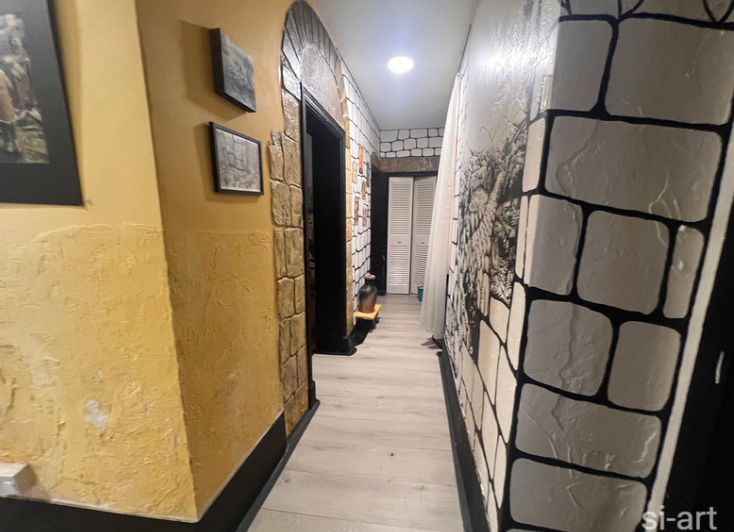
White vinegar, patience, ventilation and many months of drying eliminated the black mould. Damaged plaster was repaired, textured walls replaced cracked surfaces, and murals became features that brought life and personality into rooms that otherwise would have looked empty.
Rather than filling walls with bulky fitted furniture that restricted airflow, I chose artwork and decoration that allowed the building to breathe while giving it character.
Within six months the flat was ready to live in.
Stage one was complete.
Stage two presented a different challenge.
Money was now needed simply to survive and repay the loan. Buying furniture was out of the question.
Fortunately, creativity doesn’t require a large budget.
(check out the images from the work done from day one)
In fact, some of the best materials cost nothing at all.
Discarded pallets. Cardboard. Broken ceramic tiles. Leftover vinyl flooring. The occasional discounted storage box or pair of trestles.
Combined with papier-mâché, cement, screws and nails, they slowly became furniture.
Kitchen worktops emerged from reclaimed timber.
A dining counter appeared.
A DIY armchair took shape.
A television cabinet made largely from papier-mâché became the centrepiece of the living room.
Even a wardrobe was constructed from cardboard and reinforced internally.
Far from looking makeshift, the flat gradually developed its own character.
I stopped chasing the idea of the perfect showroom home and started creating a home that reflected who I was.
After all, a home isn’t a display room.
It’s where life happens.
It needs to function before it needs to impress.
(check out the images from the work done from day one)
The philosophy became simple.
Reuse what you can.
Repurpose whatever has another life.
Only buy what is genuinely essential.
Cutlery.
Cooking pots.
Clothes that weren’t covered in paint or cement.
Everything else could wait.
For almost eighteen months I worked on the flat every single day.
My goal wasn’t to complete huge projects overnight.
It was simply to improve something every day, however small.
By the end of the second phase, I was ready to begin saving for permanent furniture, knowing full well it might take years.
Then something unexpected happened.
Just before the second anniversary of moving in, the Minister for Housing visited to see how residents had transformed their Rent and Repair Scheme properties.
(check out the images from the work done from day one)
She spent well over an hour walking through the flat as I explained every decision, every recycled material and every homemade piece of furniture.
The recognition meant more than I can put into words.
It wasn’t just praise for the finished result.
It was recognition of the journey.
People sometimes misunderstand situations like mine.
I wasn’t homeless.
I wasn’t living in poverty.
I wasn’t asking for charity.
I simply needed an opportunity to rebuild my life.
(check out the images from the work done from day one)
Soon afterwards, another surprise arrived.
Permanent furniture.
Wardrobes.
Cabinets.
Tables.
Chairs.
Two van loads of it.
The homemade furniture that had served us so well had fulfilled its purpose.
But even then, nothing was wasted.
The timber from the DIY armchairs became part of the kitchen redesign.
An old pine child’s bed found a completely new use.
Broken tiles became mosaics.
Cardboard became storage and decorative structures.
Every screw, nail, bolt and bracket was reused somewhere else.
Even old wall panels that had once been discarded and later transformed into patio walls found another purpose as new perimeter features for what is gradually becoming a peaceful outdoor sitting area.
Once again, instead of filling skips with waste, the entire process produced little more than two sacks of cardboard for recycling and a small shopping bag of rubbish.
That, to me, is creativity.
(check out the images from the work done from day one)
Not because I made furniture from cardboard.
Not because I decorated walls with murals.
But because I slowed down enough to ask a different question before throwing something away.
What else could this become?
Over those two years, I watched other properties undergo renovations that produced truckloads of rubble and discarded materials.
Mine produced less than a van load.
That wasn’t because I spent more money.
It was because I consumed less.
Today I don’t live in a showroom.
I live in a home full of stories.
My young daughter has grown up surrounded by creativity rather than perfection.
She knows she’s allowed to play.
She knows scratches happen.
She knows furniture is meant to be used.
She understands that a home isn’t precious because of how much money was spent on it.
It’s precious because of the memories created inside it.
Looking back now, I realise this story was never really about renovating a flat.
It was about changing the way I looked at the world.
Creativity taught me patience.
It taught me to value what I already had instead of constantly chasing something new.
It taught me that sustainability isn’t only about recycling bins, government policies or international climate conferences.
It’s about changing the way we think.
Every piece of wood saved.
Every broken tile turned into a mosaic.
Every cardboard box transformed into furniture.
Every object given a second chance delayed something from becoming waste.
None of these actions will solve climate change on their own.
But together they represent a different way of living.
We often ask ourselves what one person can possibly do.
My answer is simple.
Create.
Repair.
Reuse.
Slow down.
Buy less.
Make more.
Every creative act is a small act of sustainability.
So no, this story never wandered away from its title.
It was always about the same thing.
Creativity isn’t separate from sustainability.
It is one of the most powerful ways we can become part of the solution.


Leave a Reply