What makes this series important is not the artist behind it, but the communication itself.
The work is designed to speak directly, openly and without elitism. Art, after all, is a language. If it cannot communicate, if it becomes so abstract that nobody can connect with it, then it risks becoming decoration for intellectual circles rather than something alive in the real world.
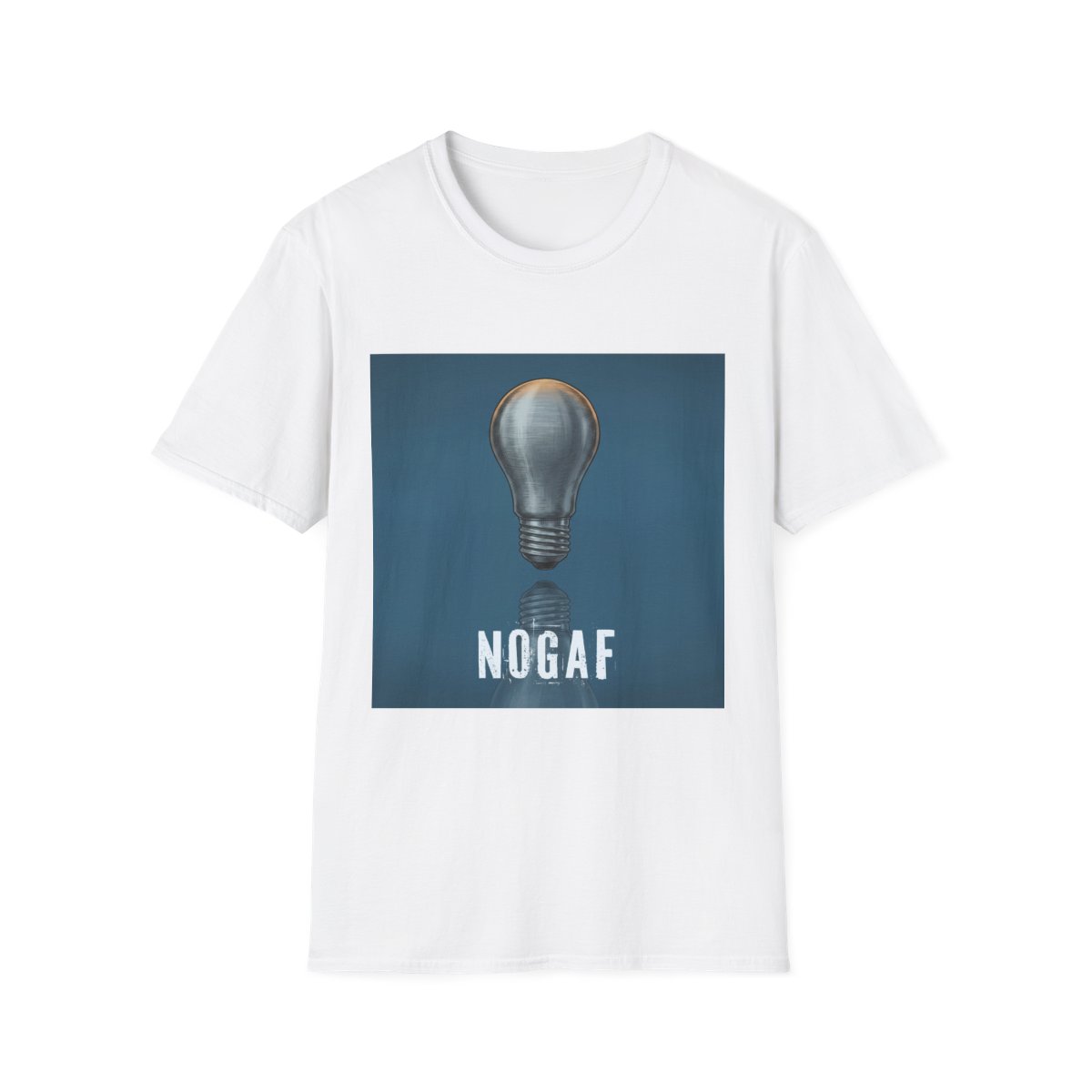
These pieces take ordinary objects — a banana, a chair and other familiar forms — and make them significant again. In a modern industrial and consumer-driven world, objects are usually reduced to products, branding or disposable function. Here, the single object is isolated and given weight, presence and meaning. Each piece asks people to stop for a second and reconsider the everyday things surrounding them. What they represent. What memories they hold. What they say about the society we live in.
The metallic surfaces and stripped-back compositions create a feeling somewhere between retro industrial design, contemporary graphic novels and underground street culture. The influence comes from that middle ground between the commercial visual language of mass media and the alternative indie culture that existed through the late 1980s and early 1990s — a space where design, music, rebellion and individuality all crossed paths naturally.
“NOGAF” — shorthand for “don’t give a fuck” — is used deliberately, not simply as provocation, but as a statement of independence. It speaks in the language of a younger generation without talking down to them. Beneath the phrase is a deeper message: that people do matter, individuality matters, and that many feel increasingly erased by a consumer culture that pushes everyone towards the same identities, the same trends and the same approved ways of thinking.
The work stands against that flattening of identity.
Not through loud slogans or polished corporate rebellion, but through rarity, individuality and personal connection.
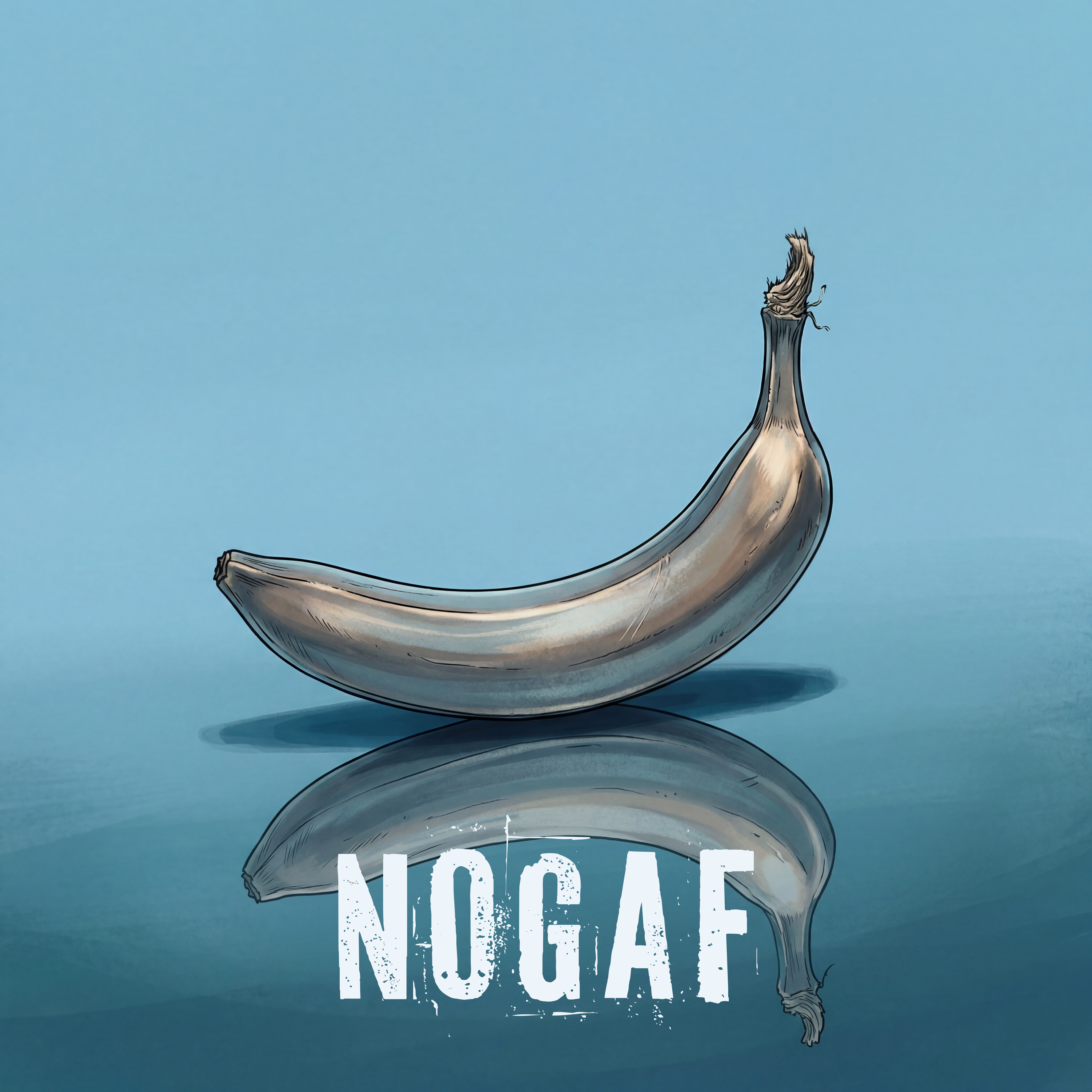
Because the designs are not mass produced, the people who wear them become part of the statement themselves. The t-shirt is not simply merchandise or fashion — it becomes a moving piece of communication carried into everyday life. The work belongs in streets, cafés, buses, gigs and communities rather than behind gallery walls or inside elite art spaces.
Each object remains open to interpretation. A chair can mean isolation, waiting, authority, memory or absence. A banana can feel humorous, disposable, iconic or strangely human. The meaning changes depending on who is looking at it, and that relationship between object and individual is central to the series.
At its core, this is work about reclaiming meaning in an age overloaded with branding and noise. It is about recognising that younger generations still have something real to say, even if commercial culture constantly tries to package, dilute and resell their identities back to them.
The series does not reject art.
It rejects the idea that art should belong only to elites.
It chooses communication over exclusivity, individuality over mass identity, and human connection over consumer performance.
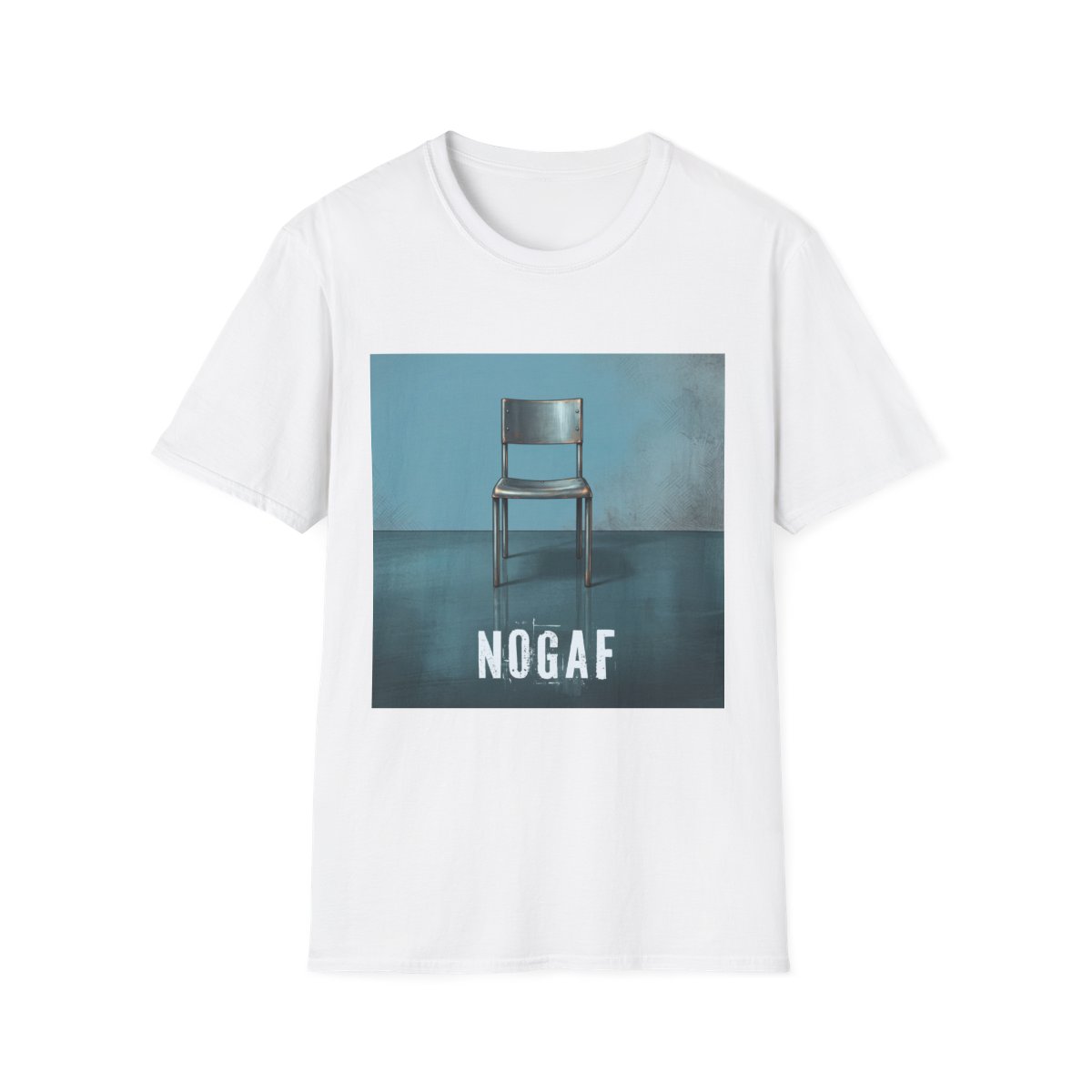
To see the whole collection click here or scan QR code



Leave a Reply