As a journalist working in print media, this may sound strange — but one of the things I miss most is browsing through physical magazines.
Stacks of them.
Flicking through pages.
Cutting out images.
Pinning references to a wall.
There was something immediate about it. Tangible. You could live with an image while you worked.
The internet gives us infinite images. But it doesn’t give us that same physical relationship with reference. Tabs close. Screens time out. You need second monitors just to recreate what used to be a board and a pair of scissors.
And printing things? I don’t even own a working printer. My process has long been either fully traditional or fully digital. That in-between stage — printouts, proofs, hybrid workflow — never quite suited me.
So over the years, finding reference became cumbersome. Especially living somewhere where access to diverse print publications is limited and expensive. An idea would strike — and instead of creating, I’d be searching. Searching leads to distraction. Distraction kills momentum.

So how do you solve that?
For me, the answer became AI.
When I first experimented with AI image generation, like most people, I was fascinated. You type an idea, and something appears in seconds. But fascination fades quickly when you realise that simply generating images isn’t really your work.
Yes, some people use AI to produce and sell work directly. And economically, it makes sense. Buyers rarely care how something was made — they care whether they like it.
But for me, that never felt right.
What changed was how I began using it.
AI stopped being the final product. It became the resource.
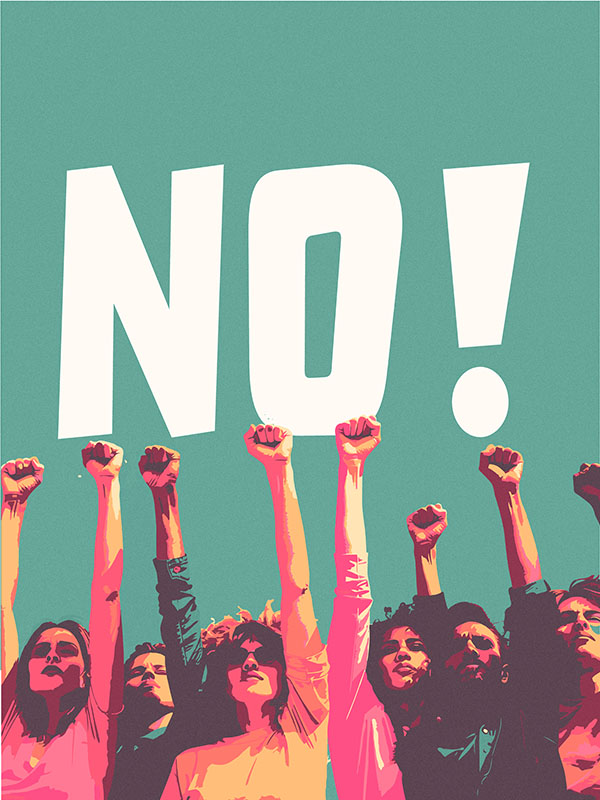
Instead of replacing stock libraries, reference books or model shoots, it replaced the searching. It became a fast way to generate elements — textures, poses, lighting variations, compositions — that I could then dismantle, manipulate and rebuild in my own style.
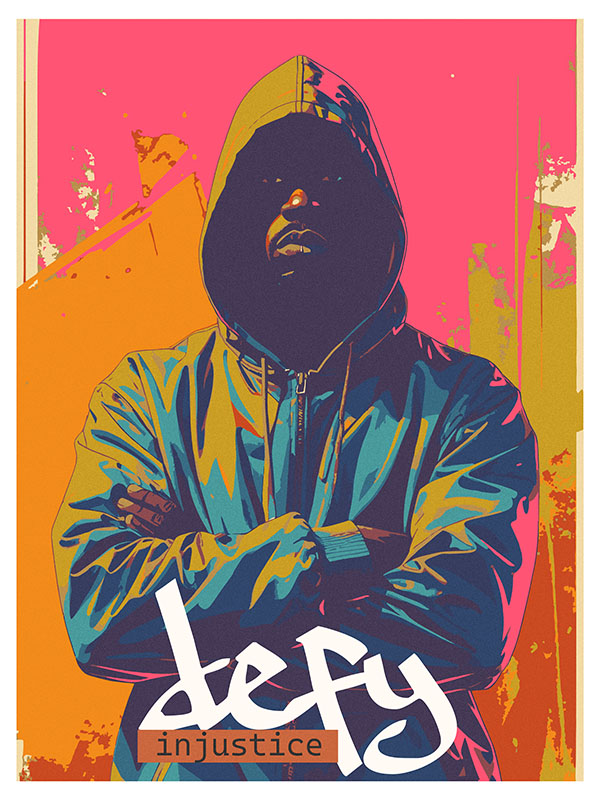
Take my recent urban street art collection.
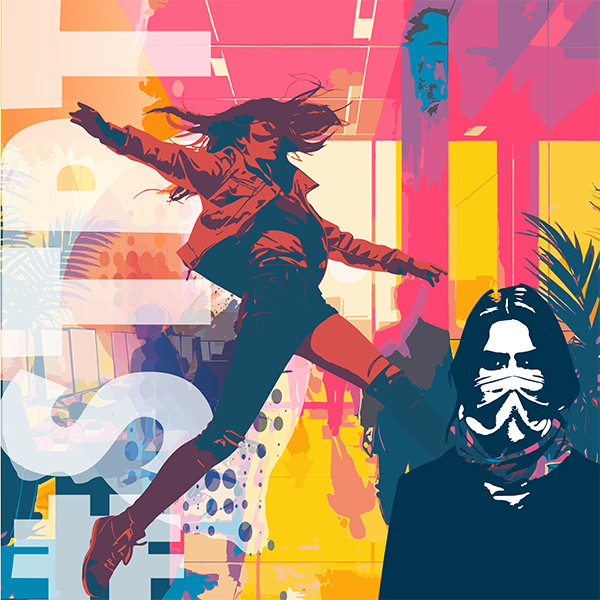
I generated textures and abstract surfaces. I altered colours, vectorised them, posterised layers, introduced halftones, overlaid treatments. I selected figures from AI outputs — not as finished graphics, but as raw material. From perhaps 100 generated images, I might extract enough usable fragments to create two or three final designs that look nothing like the original outputs.
The workload shifts. The idea remains mine.
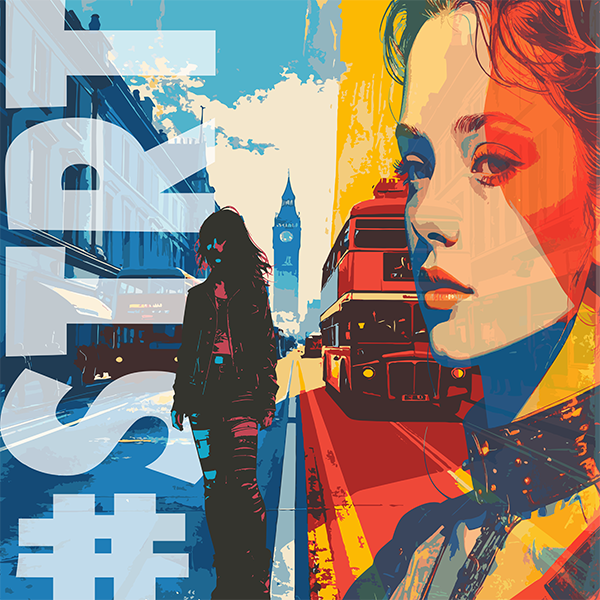
AI doesn’t design the piece. It shortens the distance between concept and execution.
Having moved fully into Adobe’s Creative Suite has also changed things. The integration, the tools, the refinement — they allow me to push further than I could with open-source tools. AI fits into that ecosystem not as the artist, but as a supplier of raw material.
And it’s important to recognise its flaws.
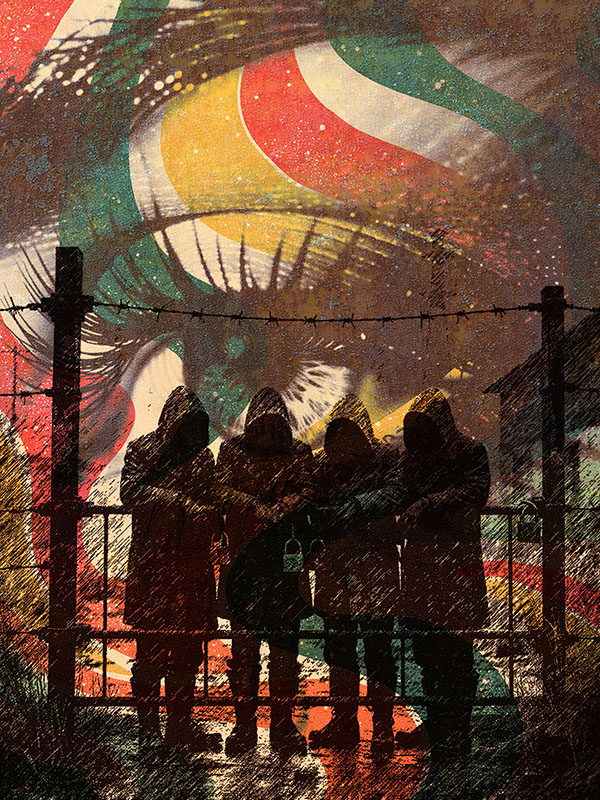
Anyone from Gibraltar has seen AI-generated images of the Rock that are geographically impossible — castles where none exist, buildings merging into Spain, the runway vanishing, coastlines fused incorrectly. AI isn’t perfect. It still misunderstands reality.
Which makes it even clearer: it’s a tool, not an authority.
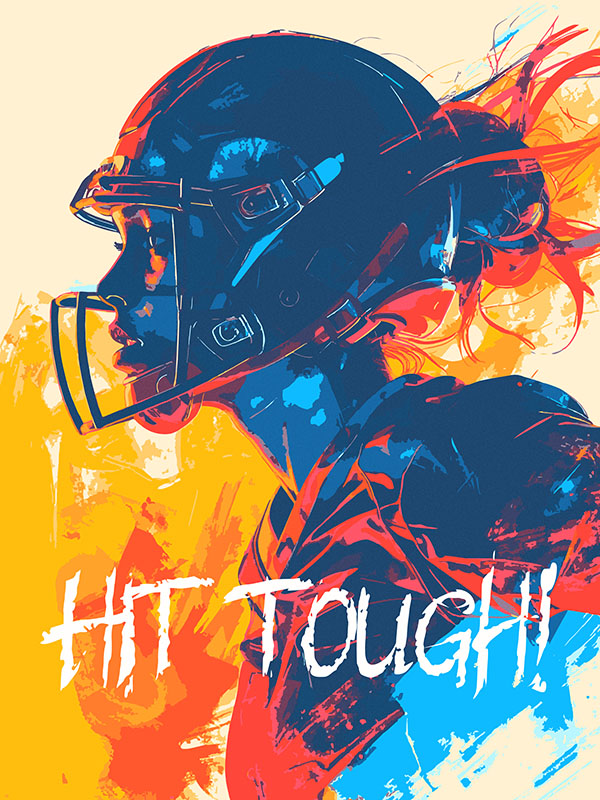
Each piece combines bold, vibrant palettes inspired by risograph printing with dynamic subjects.
What I’ve realised is this — AI removes friction. It removes the elitism of access. Not everyone can afford stock subscriptions, models, time, or physical resources. AI lowers that barrier.
Since the early 1990s, I’ve believed that art in the age of mass media would change form. That elitism in the arts would be challenged. That creation would decentralise.
AI accelerates that shift.
Yes, economies will change. Stock libraries will adapt. Designers will adapt. Some business models will struggle. But cultural shifts have always reshaped creative industries.
For me, the key is intention.
I’m not rejecting AI.
I’m not surrendering to it either.
I’m integrating it.
It assists. It supplies. It speeds up.
But the decisions, the manipulation, the final aesthetic — those remain mine.
AI didn’t replace my process.
It gave it a new lease of life.
To view my designs and illustrations you can check
stephenignacioart.smugmug.com (page is being developed in coming weeks to provide for print on demand and download sales)
of for my Print on Demand at either
my latest launch at printify which is currently under contsruction
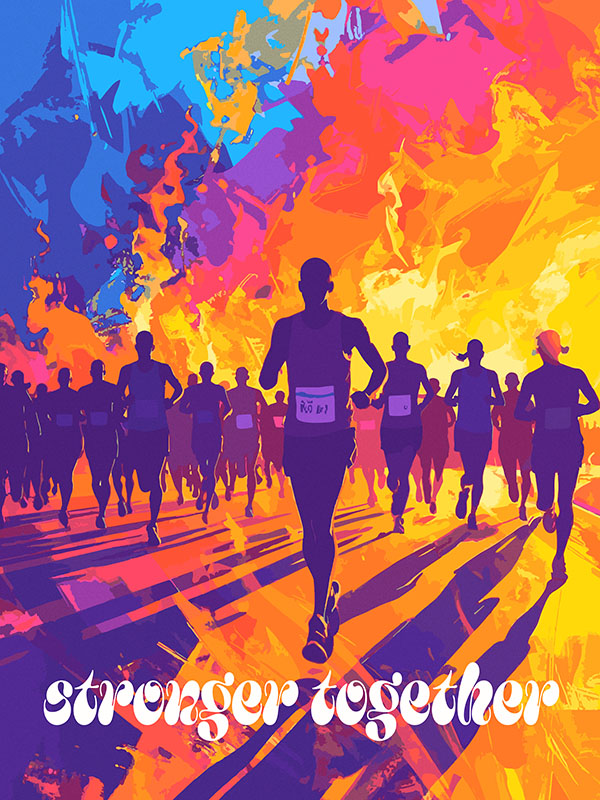
These illustrations prioritise expression over realism and meaning over decoration, using colour and movement to communicate motivation without excess detail or ornamentation.
 stephenignacioart
Leave a comment